Built-In vs External Mic Preamps: What’s the Real Difference?
If you’re recording with an audio interface, you already have a mic preamp built in. So why do so many engineers and producers still invest in external preamps?
The answer isn’t about having a preamp—it’s about how well that preamp captures your sound.
What Is a Built-In Preamp?
Built-in preamps are the microphone inputs on your audio interface. They’re designed to be clean, compact, and cost-effective, allowing you to plug in and start recording right away.
For many situations, they work perfectly fine—especially when you’re just getting started.
But they’re also designed with limitations in mind:
- Shared power and space across multiple channels
- Cost-efficient components
- A focus on transparency rather than character
What Is an External Mic Preamp?
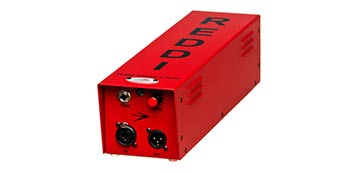
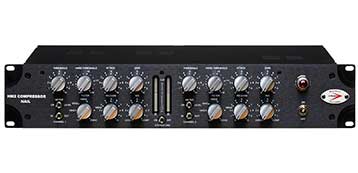
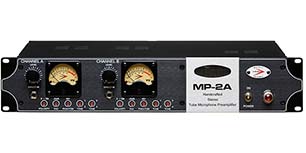
An external mic preamp is a dedicated piece of hardware designed specifically to amplify and shape your signal with the highest possible quality.
Instead of fitting into a compact interface, it has the space and components needed to deliver:
- Greater headroom
- Lower noise at high gain
- More detailed transient response
- Enhanced tonal character
In other words, it doesn’t just amplify your signal—it improves it.
The Real Difference: Depth, Punch, and Dimension
The biggest difference between built-in and external preamps isn’t something you see on a spec sheet—it’s something you hear.
With a high-quality external preamp:
- Vocals feel more present and “finished”
- Drums hit harder with more punch
- Instruments sit naturally in the mix
- Your recordings have a sense of depth and space
Built-in preamps tend to sound clean—but often a bit flat. External preamps bring recordings to life.
Why This Happens
The difference comes down to design.
High-end preamps—especially transformer-based designs—use carefully selected components and circuits that add subtle harmonic content and weight to the signal.
This is the same philosophy behind classic consoles from the 1970s—and why their sound is still sought after today.
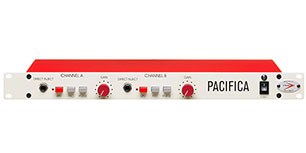
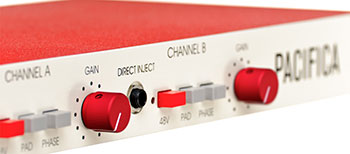
For example, the A-Designs Pacifica mic preamp is based on the legendary Quad Eight console design, delivering that same punch, clarity, and musical depth.
Where the P-1 Fits In
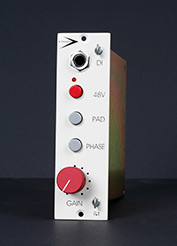
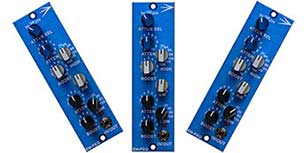
If you’re working in a smaller setup or building a modular rig, 500-series preamps offer a powerful alternative.
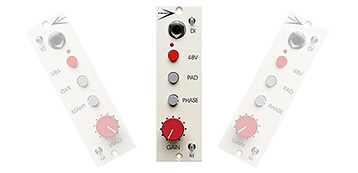
The P-1 500-series preamp brings the same Quad Eight-inspired tone into a compact format—making it easier to upgrade your sound without overhauling your entire setup.
It’s a great way to step into high-end analog sound one channel at a time.
When Should You Upgrade?
You’ll start to notice the need for an external preamp when:
- Your recordings feel flat or lack energy
- You’re struggling to get vocals to sit properly
- Your mixes require heavy processing to sound finished
- You want a more professional, polished sound at the source
At that point, upgrading your preamp can make a bigger difference than almost any plugin or mix tweak.
Final Thoughts
Built-in preamps are a great starting point—but they’re not the end of the road.
An external preamp is one of the most noticeable upgrades you can make in your recording chain. It improves your sound at the source, making everything downstream easier and more musical.
Once you hear the difference, it’s hard to go back.