Quad Eight vs API vs Neve: Understanding Three Legendary Recording Console Sounds
Few topics generate more discussion among recording engineers than the sonic differences between classic microphone preamps. Among the most respected names in recording history, Quad Eight, API, and Neve continue to influence how engineers think about tone, depth, punch, and musicality.
These three console designs helped define the sound of countless records. While all three are transformer-based designs built during the golden era of analog recording, each approaches audio amplification differently. Those differences affect transient response, harmonic content, midrange presentation, low-frequency behavior, and overall musical character.
Whether you're building a studio, choosing an outboard preamp, or simply trying to understand why engineers still discuss these designs decades later, understanding the differences between Quad Eight, API, and Neve can help you make better recording decisions.
For a deeper look into the history behind Quad Eight circuitry, see our article on Quad Eight Preamps.
The Legacy of Three Recording Icons
The 1960s and 1970s produced some of the most influential recording consoles ever built. During this period, manufacturers developed unique approaches to audio amplification that continue to shape modern studio equipment.
Quad Eight
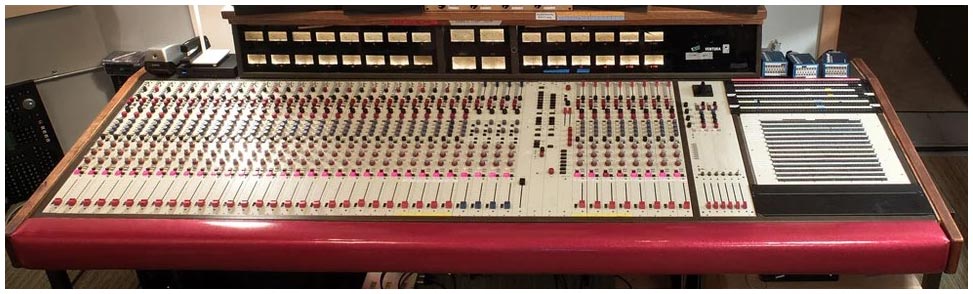
Quad Eight consoles became popular in major recording facilities throughout Los Angeles and other recording centers. Their circuitry delivered a unique combination of clarity, depth, and musicality that many engineers still consider one of the most balanced console sounds ever created.
Unlike some designs that intentionally emphasize coloration, Quad Eight circuits achieved a remarkable blend of openness and character. Engineers often describe the sound as wide, dimensional, punchy, and natural.
API
API consoles became known for aggressive punch, fast transient response, and a forward midrange presentation. Their discrete op-amp architecture and transformer coupling helped create a sound that became especially popular for rock drums, electric guitars, and energetic rhythm sections.
The API sound is frequently described as bold, immediate, and exciting.
Neve
Neve consoles established a reputation for warmth, thickness, and rich harmonic complexity. Their transformer designs and Class A circuitry produced a larger-than-life sound that remains highly sought after for vocals, orchestral recordings, acoustic instruments, and mix bus processing.
The classic Neve character is often described as smooth, authoritative, and luxurious.
How Transformer Design Shapes the Sound
One of the biggest reasons these preamps sound different comes down to transformer behavior.
Transformers influence:
- Frequency response
- Transient handling
- Low-frequency saturation
- Harmonic generation
- Overall depth and dimensionality
Many engineers focus on active circuitry, but transformers often contribute a significant portion of a preamp's personality.
For more information on this subject, see Transformer-Based Gear.
Quad Eight Sound Characteristics
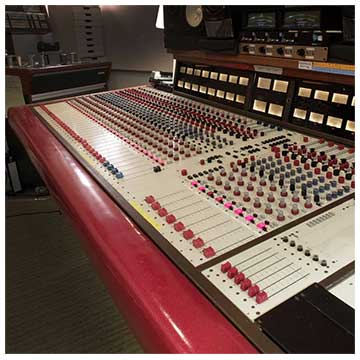
Quad Eight preamps occupy a unique position between the punch of API and the warmth of Neve.
Many engineers describe Quad Eight circuits as offering:
- Excellent transient detail
- Extended low-frequency response
- Large stereo imaging
- Open top-end without harshness
- Strong yet natural midrange presence
- Exceptional depth
Perhaps the most remarkable aspect of the Quad Eight sound is its balance. It delivers weight without excessive thickness and detail without sounding clinical.
This versatility made Quad Eight consoles useful across many genres, from rock and jazz to orchestral and vocal recording.
Engineers seeking similar characteristics today often look toward designs inspired by the original Quad Eight philosophy.
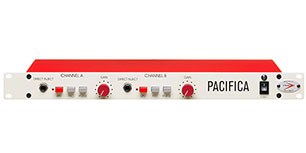
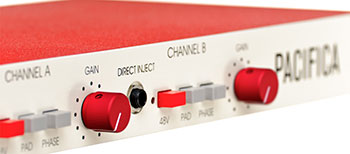
One modern example is the Pacifica Mic Preamp, which was inspired by the classic Quad Eight sound. The Pacifica incorporates custom Cinemag transformers and a design approach focused on preserving the openness, punch, and dimensionality that made vintage Quad Eight equipment so respected.
Quad Eight vs API vs Neve on Drums
Drums are one of the clearest places to hear the differences between these classic preamp families.
API is widely appreciated for its fast attack and punchy forward character. It can make snare drums crack, kick drums hit hard, and toms feel immediate in the track. That sound has been part of countless successful rock and pop records.
Quad Eight takes a slightly different approach. It still delivers strong impact, but it tends to present the entire drum kit with more depth and dimensionality. Rather than spotlighting only the leading edge of the transient, Quad Eight often captures the body of the kit, the space around it, and the relationship between the close mics and the room.
For many engineers, that makes Quad Eight the more complete-sounding choice. It can feel powerful without becoming overly aggressive, which is especially useful when the drums need to sound natural, three-dimensional, and musical rather than simply loud.
Neve, by contrast, often adds density and size to drums. That can be excellent when the production calls for weight and thickness, but Quad Eight frequently stands out when the goal is balance, openness, and a more realistic portrayal of the performance.
Quad Eight vs API vs Neve on Vocals
Vocals are where a preamp's personality can have a major impact on the final production.
API can help a vocal cut through a dense arrangement by keeping the front edge of the performance clear and focused. It is a strong choice when presence and urgency matter most.
Neve often adds rich harmonic density and a flattering sense of thickness. For some voices, that can be exactly the right treatment, especially when the recording needs a bigger, smoother tonal footprint.
Quad Eight often provides the most flexible vocal sound of the three. It captures detail and intimacy without becoming too forward or too heavy. That balance can help a vocal sit naturally in the track while still feeling connected to the listener.
In practical terms, Quad Eight is often the preamp that lets the singer sound like themselves, only more dimensional. That is a valuable trait when the goal is to preserve performance nuance and avoid over-processing at the tracking stage.
Quad Eight vs API vs Neve on Electric Guitar
Electric guitars are another source where these designs show their differences clearly.
API tends to emphasize articulation and attack, which can be excellent for rhythmic parts that need definition. It is especially effective when the arrangement is dense and the guitar has to stay clear without becoming muddy.
Neve often gives electric guitars more mass and harmonic richness. Lead lines can feel larger, and rhythm parts can gain additional body.
Quad Eight often sits in a very useful middle ground. It preserves the character of the amplifier and player without exaggerating either attack or thickness. That makes it an appealing choice for layered arrangements, clean guitar parts, and tones that need to remain open while still sounding authoritative.
Engineers who like a clean but substantial guitar tone often appreciate the way Quad Eight holds together under pressure. It can keep complex parts intelligible without stripping away musical character.
How A-Designs Interprets the Quad Eight Philosophy
A-Designs Audio has long been associated with gear that serves real recording work rather than chasing trends, and that philosophy aligns closely with what makes Quad Eight so respected.
The Pacifica is a perfect example. Inspired by the classic Quad Eight console sound, it uses custom Cinemag transformers to preserve the musical balance, depth, and openness that made the original design so admired. Cinemag founder Tom Reichenbach was involved with transformer designs associated with classic Quad Eight equipment, which helps connect the Pacifica to that lineage in a meaningful way.
That heritage matters because it is not just about nostalgia. It is about a design approach that still works. Engineers continue to value preamps that can deliver punch and detail without forcing the source into an overly colored shape. Pacifica speaks directly to that need.
For studios looking to add a Quad Eight-inspired sound in a more compact format, the P1 brings that same basic character into the 500 Series world. It is a practical option for engineers who want flexibility without giving up the openness and dimensionality that define the larger-format Pacifica concept.
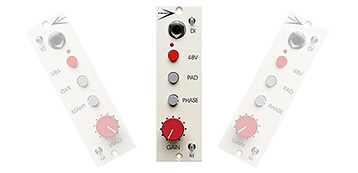
Both products are built in the USA and both reflect a commitment to making equipment that is useful in the studio every day. That practical approach is part of what gives A-Designs its place in the conversation around modern transformer-based recording tools.
For more on why these choices matter, see Why a Good Preamp Matters and Built-In vs External Mic Preamps. Those articles help frame why a quality preamp can change the entire experience of tracking.
Quad Eight on Acoustic Instruments
Acoustic instruments are one of the best places to appreciate the strengths of Quad Eight.
On acoustic guitar, Quad Eight tends to preserve the natural shape of the instrument while giving it more size and depth. The tone can remain open and detailed without becoming brittle or hyped.
On piano, the same qualities help capture both articulation and body. The result is often a piano sound that feels full, dimensional, and musical rather than overly bright or overly thick.
On strings, percussion, and stereo room microphones, Quad Eight often excels because it gives the listener a convincing sense of space. That spatial realism is one of the reasons engineers continue to seek out this type of circuitry.
API can be a great choice when additional attack is needed, and Neve can be wonderful when extra weight is desired. But when the goal is to capture the instrument honestly while still adding a touch of console character, Quad Eight often makes the most satisfying choice.
How These Sounds Fit Into a Modern Hybrid Studio
Modern studios rarely rely on a single flavor of analog gear. Instead, engineers build a palette of tools that complement one another across the tracking and mixing process.
That is where the Quad Eight approach becomes especially valuable. Because it is so balanced, it can serve as a foundation for a wide variety of sessions. It does not force the engineer into a narrow aesthetic. Instead, it creates a recording that still has room to be shaped later.
In a hybrid studio, that flexibility is a major advantage. Sources recorded through Quad Eight-style circuitry often respond well to later EQ, compression, and saturation because the front end has already captured the source in a clear, dimensional way.
That is also why many engineers consider Quad Eight-inspired designs to be excellent general-purpose preamps. They can be used on lead vocals, drum overheads, acoustic guitars, bass DI, percussion, and room mics with confidence.
Why the Quad Eight Sound Still Matters
Some preamp sounds become popular because they are dramatic. Others endure because they are genuinely useful. Quad Eight belongs in the second category.
Its strength is not that it imposes a big signature. Its strength is that it enhances the source in a way that feels natural and complete. That makes it relevant in modern productions where clarity, depth, and adaptability are often more valuable than extreme coloration.
For that reason, many engineers continue to view Quad Eight as one of the most musically satisfying console sounds ever developed. It offers just enough character to feel special, but not so much that it limits the recording.
That combination is rare, and it is a big part of why the sound remains so respected.
The reputation of Quad Eight wasn't built on theory alone. Many classic recordings were tracked and mixed through Quad Eight consoles, helping establish their reputation for depth, punch, and musicality. You can explore some notable examples in our article on Famous Albums Recorded on Quad Eight Consoles.
Choosing the Right Preamp for the Job
Choosing between Quad Eight, API, and Neve is less about declaring a winner and more about matching the sound to the source and the session.
Choose API when you want maximum attack and an unmistakably forward presentation. Choose Neve when you want rich harmonic density and bold coloration. Choose Quad Eight when you want the most balanced combination of openness, depth, punch, and musicality.
For many engineers, Quad Eight ends up being the most versatile choice of the three. It can sound impressive on nearly any source, and it often does so with less compromise than more specialized designs.
That is why the Quad Eight sound continues to inspire modern equipment and why so many engineers still search for products that capture its character in a dependable, studio-ready format.
Related Articles
Famous Albums recorded using Quad-8 Consoles
Built-In vs External Mic Preamps
Do I Need a Microphone Preamp?
Analog Tools for Hybrid Studios
Bring the Quad Eight Philosophy Into Your Studio
Built in the USA. Designed for real recording sessions. Made for engineers who value depth, balance, and musicality.